Saturday, February 11, 2012

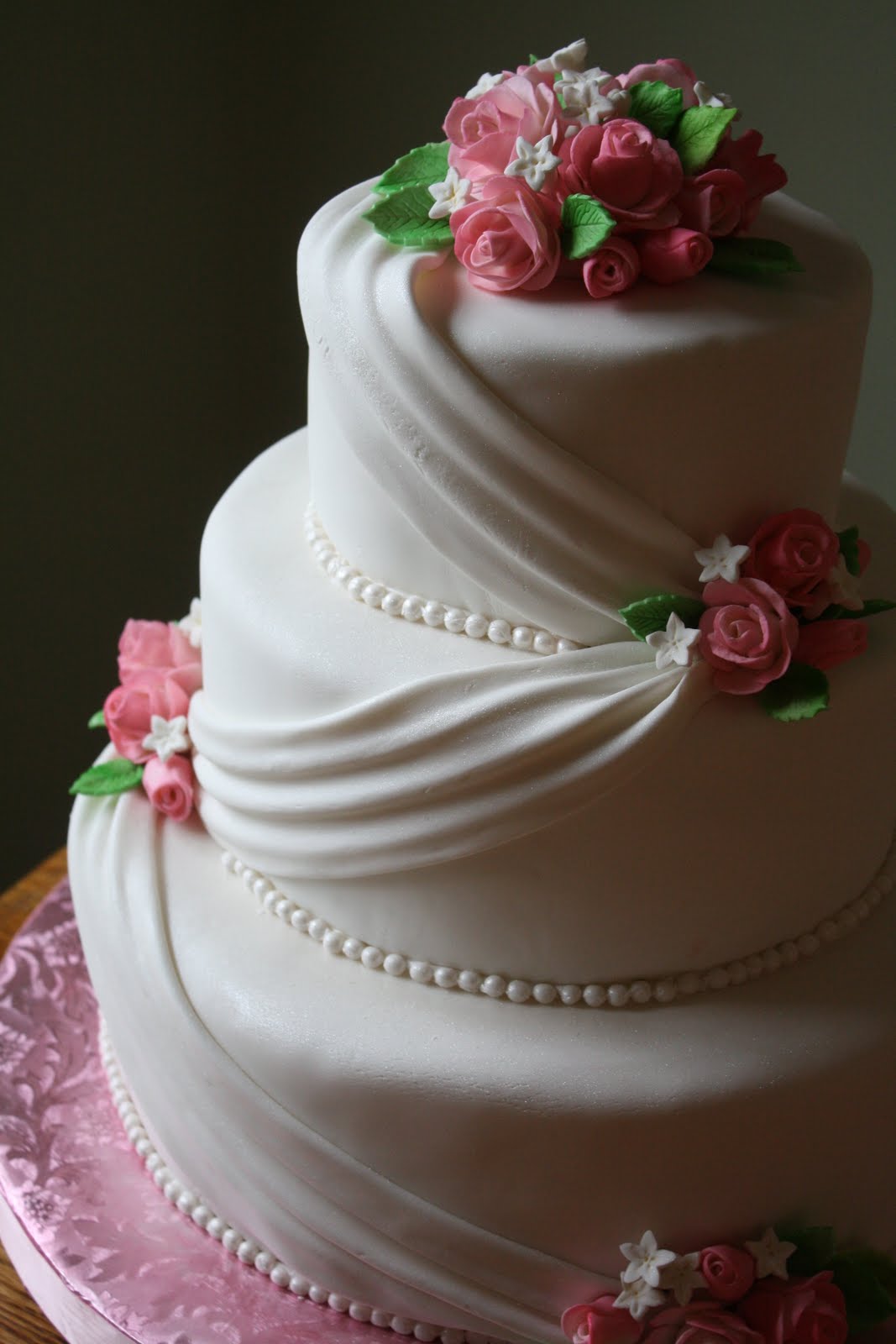
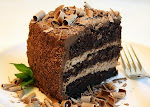
Chocolate Fudge Layer Cake with Vanilla Buttercream and Bittersweet Chocolate Ganache . . .


Last week in my Bakery Merchandising class, my fellow students and I spent hours preparing for a sale in the culinary school's retail bakery. One of my duties included piping huge swirls of fluffy vanilla buttercream onto dozens of yellow cupcakes, chilling them until firm, then suspending them upside down, one by one, and dipping them into a deep bowl of warm chocolate ganache.


At first my task progressed smoothly, but then the big white swirls started plopping off as I lifted the cold cupcakes out of the chocolate. Cursing under my breath with each failed attempt, I nervously fished out big globs of buttercream--once, twice, three times. Speed was of the essence that day and, not wanting to gum up the works, I took immediate steps to remedy the problem. Soldiering on, I carefully refrosted some of the cupcakes, chilled them longer, rewarmed the ganache, and crossed my fingers.


Meanwhile, directly across from me a much younger student, who told me she'd been working in a bakery since high school, was deftly enrobing iced layer cakes in ganache. I kept glancing over as she ladled the fluid chocolate atop each cake, letting it move languidly down the sides before picking up a small offset spatula to cover any bare spots. Her sense of calm bordered on the meditative, and her technique produced beautiful results.

It made me want to do the same thing at home. Damn the cupcakes, I said to myself, full speed ahead with a big round layer cake in my own kitchen. 

Thus was the inspiration for today's cake. (A cake that would, I believe, make a sensational Valentine's Day dessert!)


About this recipe . . . 

From the book Welcome to Junior's! Remembering Brooklyn with Recipes and Memories from its Favorite Restaurant, this fudge cake is moist and densely textured. The recipe actually produces three hefty layers, but they were each so tall and obviously substantive, I decided to save and freeze the third one. If I'd actually used all three layers the iced and coated cake would probably have been 10" tall. (If you need a truly lofty layer cake, go ahead and use all three.) The vanilla buttercream recipe is also adapted from Junior's. The decision to apply a luxurious dark-chocolate ganache over the whole thing was, as you know, quite my own.


I bought this book last April in Junior's Restaurant (the one in Times Square) during a trip to NYC, and I have to admit I'm pretty fond of it (the book, yes, and also the restaurant!). My family and I visited Junior's twice while we were there, one night just for dessert (that famous cheesecake, of course), and again on our last morning in town before heading to the airport. We'd finished breakfast and were getting up to leave when it hit me that I could not exit Manhattan without my own copy, bright stacks of which were displayed near the entrance. Along with solid recipes, this volume offers an honest and deeply affectionate homage to Brooklyn--as it was decades ago, and as it is now. It's full of historical tidbits that are pretty engrossing for anyone who's interested in the evolution of a classic, family-owned, American restaurant. I began reading it at the airport, while awaiting our flight, and hardly put it down until our plane landed back in Detroit. I used one of Junior's cute paper coasters as my bookmark.


Chocolate Fudge Layer Cake with Vanilla Buttercream 
and Bittersweet Chocolate Ganache
(For a printable version of this recipe, click here!)

Yield: Makes one large, tall, 3-layer cake that, when iced and ganached, could probably serve 20 or more people.

Preheat oven to 350 degrees. Butter three round 9"x2" cake pans, place parchment paper circles in the bottom, and then butter the parchment (it's easiest to do this with a pastry brush, and do use unsalted butter). Place a rack in the middle of your oven.

Ingredients for the cake layers:

3 cups cake flour
1 Tbsp. baking powder
1 generous teaspoon of coarse kosher salt
1/2 tsp. baking soda
1/2 cup unsalted butter, softened to room temp.
1/2 cup vegetable shortening 
1 and 1/2 cups granulated sugar
3/4 cup light brown sugar, packed
7 large eggs, not cold
9 oz. bittersweet chocolate, melted and cooled to lukewarm
1 Tbsp. vanilla extract
2 and 1/4 cups milk (I used 2 percent.)

Onto parchment, or into a medium size bowl, sift together the flour, baking powder, salt, and baking soda.

In the large bowl of your mixer, using the paddle attachment on high speed, cream together the butter, shortening, granulated sugar, and brown sugar. Beat for several minutes, until the mixture turns light yellow. Scrape the bowl and beaters. Again on high speed, add in the eggs one at a time, beating for a couple of minutes after each addition. Stop and scrape the bowl and beaters.


Pour in all of the chocolate and vanilla, and continue mixing on high speed for up to 20 minutes. (Yes, I said 20 minutes--that's what the instructions indicate, and that's what I did. The batter is quite fluffy when you're done with this step.) Take the bowl off of the mixer now, and gently scrape again with your spatula.

Now, sift one quarter of the dry mixture over the batter and carefully stir (as opposed to just folding, which you will be inclined to do) it in. Then pour in one third of the milk, stirring to blend. Continue in this fashion, until you've incorporated all the flour and milk, stirring well after each addition.


Portion the batter equally into the three prepared pans, and smooth it out. Gently tap each pan on your work surface to help release air bubbles. Bake the pans side by side on the middle rack, but don't let them touch each other. (The cookbook suggests delaying the baking of one layer if you don't have an oven large enough to accomplish this, rather than baking one of the layers on an upper- or lower rack.)


Bake the layers for about 30 minutes, until a toothpick inserted in the center of each one comes out clean, and the sides of the cakes just begin to pull away from the sides of the pan. Cool the layers on racks for 30 minutes before inverting them onto racks (and removing any parchment still stuck to them) to finish cooling.


Ingredients for Vanilla Buttercream Frosting:

2 lbs. (8 cups) of confectioners' sugar, well sifted (I always use Domino's 10x for frosting. Much less lumpy than the cheaper stuff.)
1/2 tsp. salt
1 and 1/2 cups (3 sticks) unsalted butter, softened to room temperature
1/2 cup margarine or high-ratio shortening, not cold (I did not use margarine, which the original recipe indicates. Instead, I used Sweetex, which is a "high-ratio" shortening typically used by cake decorators. Trans-fat free, it adds stability to frostings--ie., helps them hold up without softening in warm temps--and doesn't lend a greasy mouth-feel the way vegetable shortening can. It also helps make frosting easier to spread. You can buy it at cake decorating supply stores, but be forewarned that it's not cheap.)
2 Tbsp. light corn syrup
1 Tbsp. and 2 tsp. vanilla extract
1 scant tsp. almond extract
1/2 cup heavy cream, not too cold

Onto a parchment sheet, or into a large bowl, sift together the confectioners' sugar and the salt, being sure to break up out any stubborn sugar lumps. In the large bowl of your electric mixer, using the paddle attachment on high speed, cream together the butter and margarine/Sweetex; beat for about three minutes, until light yellow. Still on high speed, add in the corn syrup and vanilla. Stop and scrape the beaters and bowl. Now on low speed, add the sugar in two additions, beating well after each one. Pour in the cream and blend until the frosting seems of reasonable spreading consistency; if it seems too thick, add in more cream as needed, a teaspoon or so at a time. Keep the frosting tightly covered until you're ready to use it. If you won't be using it within a couple of hours, cover and refrigerate it. 

Ingredients for the Bittersweet Chocolate Ganache:

8-10 oz. good quality dark chocolate (I tend to use Ghirardelli if I don't want to spend a fortune. If I'm flush with cash, I'm more likely to use Callebaut, and more rarely Valrhona. Bittersweet ganache works well with this cake since it balances the sweetness of the buttercream frosting.)
5-6 oz. heavy cream (The amount can vary a little bit, depending upon how soft you want your ganache to be.)
2 tsp. soft unsalted butter

Chop the chocolate into small pieces and place it in a heatproof bowl.

In a small sauce pan, heat the cream slowly until it simmers. Pour it over the chocolate, add the butter, and do not stir. Let the mixture sit undisturbed for a couple of minutes. Stir until the chocolate is obviously completely melted; don't whisk, as you don't want to add bubbles. As the ganache begins to cool, you'll be able to get an idea of its texture. If it seems it will be too thick to ladle onto your cake, stir in a little bit more warm cream, adjusting as needed. If you won't be using the ganache right away, keep it well covered in the fridge. It can be warmed up in a double boiler, or gradually in the microwave if watched very closely. 


To assemble the cake:

Place your first layer of cake on a cardboard cake-circle so you can more easily lift and move it; this will be a big help when it comes time to add the ganache coating. Frost the top of the bottom layer.  Frost the top of the middle layer. Frost the top of the top layer and the sides of the cake as smoothly as you can, ideally with an offset spatula. It doesn't matter too much if some crumbs show through in the frosting at this point since the cake will be covered in chocolate, but any obvious lumps should be smoothed out to ensure a nice finish. 

Place the cake, still on its cardboard circle, over a cake rack that's been placed atop a rimmed baking sheet. 


When your ganache is at the right consistency (it should drip easily from a ladle, like a very pourable gravy), ladle it directly onto the top center of the cake, letting it spread out and drip down the sides. The excess ganache will drip off the bottom edges of the cake onto your baking sheet (that excess can be saved and used again, assuming it doesn't contain crumbs, etc.). Use a small, metal, offset spatula to smooth out, and dab delicately at, any bare spots on the top and sides of the cake; work fairly quickly since the ganache will start to set up as it cools. Let the ganache-covered cake sit on the cooling rack over the baking sheet until the ganache seems somewhat firm. Move the cake onto its serving plate, sliding a firm metal spatula beneath it to help lift it up off the cooling rack. Before serving, add on any decorations you prefer (whipped cream swirls, piped frosting, chocolate-dipped strawberries, whatever you like).


(If you'd like to comment on this post, or to read any existing comments, please click on the purple COMMENTS below.)

Tuesday, January 31, 2012

Hearty Oatmeal Bread . . . with Walnuts & Sweet Dried Cherries

I bake really often, which I'm sure comes as no surprise. But the fact is, I only blog about a fraction of the stuff I bake. That's because not everything I bake at home is a brand new recipe for me (there are always the old favorites that my family requests over and over), and not every new recipe I try turns out to be pleasing enough to even bother sharing. On top of that, I do a lot of fiddling around and experimenting with recipes--often to their advantage and sometimes to their detriment--so what emerges from my oven can be unpredictable. I'm always happy as a clam when something turns out surprisingly well, and I'm positively on cloud nine if anyone expresses unbridled enthusiasm for what I've come up with.


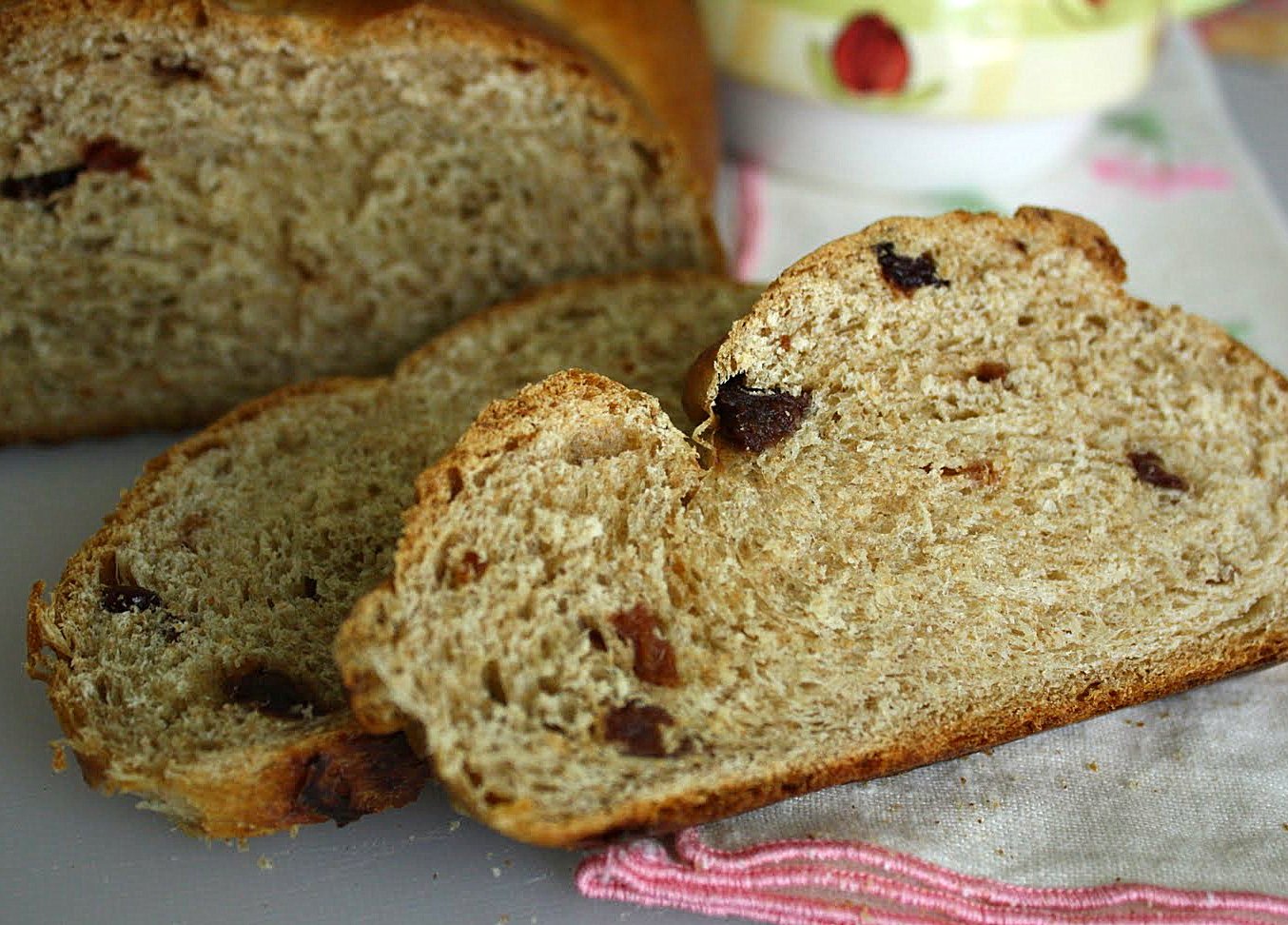
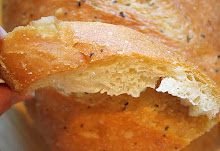
It's not hard to please people with a gorgeous cake or a gooey cookie, but it's always a surprise to me when a wholesome loaf of bread elicits that same ardent fervor from my taste-testers. That's what happened with this yeast bread. Highlighting oats, a little flax meal, walnuts, and sweet dried cherries (from the orchards of northern Michigan, of course), this loaf has a buttery warmth that's hard to resist. This past weekend, the hubby actually said to me, "You have GOT to make this bread again. I love it." Those were pretty strong words, coming from him. He's always open to trying any new food but, ultimately, he's a man of fairly discriminating taste. Only time will tell, but I suspect I'll eventually be adding this recipe to our growing list of favorites. I think it's a keeper!


About this recipe . . . 

Adapted from a King Arthur Flour oatmeal bread recipe, I tweaked this loaf to include a small amount of chopped dried cherries, chopped walnuts, and flax, and I made a few measurement alterations to some of the other ingredients while customizing some of the steps. Both walnuts and cherries, if you ask me, are among the most flavorful ingredients you can add into yeast bread; walnuts lend that buttery aspect, while cherries pack a tangy gusto that other dried fruits just can't muster. It's a great combo.

This recipe is very simple, and not too time consuming. The bread is delicious even eaten plain, but it's at its absolute best when toasted and buttered. I hope you like it as much as we did.


Hearty Oatmeal Bread with Walnuts and Sweet Dried Cherries
(For a printable version of this recipe, click here!)

Makes one standard size loaf (about 9"x5").

3 and 3/4 cups unbleached bread flour (divided use)
1 cup old fashioned oats, pulsed (on and off) in a food processor for 30 seconds
2 Tbsp. flax meal (Easy to find in health food stores, and some grocery stores. If you don't have it, or prefer not to buy it, I think you could substitute an equal amount of whole wheat flour, ground oats, or bread flour.)
3 Tbsp. light brown sugar, lightly packed
1 and 1/4 tsp. coarse kosher salt
2 and 1/4 tsp. instant yeast (I use SAF brand instant yeast; they sell it in health food stores, from King Arthur Flour, and I've seen it at Whole Foods. You don't have to proof instant yeast and it's very reliable.) 
3/4 cup warm milk
1/2 cup warm water

3 Tbsp. soft unsalted butter
1/2 cup well-chopped walnuts
1/2 cup well-chopped dried cherries, loosely packed

1/4 cup melted unsalted butter, to brush on the top of the unbaked and just-baked loaf

In a large mixer bowl, by hand, whisk together 3 cups of the flour (reserving 3/4 cup), the ground oats, flax meal, sugar, salt, yeast, nuts, and cherries. Put the bowl on the mixer and, using the flat beater on the lowest speed, add in the milk, water, and butter. Mix for a minute or two to combine, until the dough looks shaggy.   

Turn the mixer off, clean the dough off of the flat beater, and switch to the dough hook. Mix on the lowest speed using the hook for 2 minutes. 


Dump the shaggy dough onto a well-floured surface (use your leftover 3/4 cup flour). It should be pretty moist; if it's not very moist, use less flour on your work surface. 


Knead the dough by hand for about 4 minutes, until it feels relatively smooth and elastic. 

Put the dough into a greased (or sprayed with vegetable spray) bowl. 


Cover it with a greased/sprayed piece of plastic wrap, then cover the top of that with a dish towel. Place the bowl in a warm spot and let it rise until almost doubled (as in the photo below); this may take about 60 to 75 minutes.


Meanwhile, grease one 9"x5" standard-size loaf pan. Take the risen dough from its bowl, and deflate it on your work surface by pressing on it with your palms/knuckles. Use as little flour as you can get away with at this point (just enough to keep it from sticking; excess flour added at this point does more harm than good). Pick the dough up and gently round it, tugging downward on the sides; you want to create a bit of tension on its surface. Cover the dough again with the greased plastic wrap, and let it rest for 10 to 15 minutes. 


Uncover it and form it into a loaf shape, being very careful to tightly pinch any seams closed. 


Put it in the greased pan, seam side down. Preheat your oven to 350 degrees.

Cover the pan with the greased plastic again, then cover that with the dishtowel, and let the dough proof (have its final rise) in a warm spot for about 45-60 minutes. The proofed dough should have risen above the sides of the pan, as in the photo below. 


Shallowly slash/score the top of the loaf with a baker's lame, a sharp razor blade, or an extremely sharp knife; don't slash deeply (doing this helps the loaf to expand neatly without bursting haphazardly in the oven). Brush the top of the loaf liberally with half of melted unsalted butter, and reserve the rest.


Just before you put the bread in the hot oven, spritz water into the middle of the  oven from a spray-mist bottle (a few good squirts), and/or while the oven is warming up put a shallow pan of very hot water on the bottom shelf of the oven (bread likes to bake in a slightly steamy atmosphere).

Bake the bread for about 30-35 minutes, or until its interior registers 190-195 degrees on an instant-read thermometer (if you want to test it, tip the baked loaf out of the pan and insert the thermometer into the bottom). Don't peek in the oven until the bread's been baking for at least 15-20 minutes. If the bread seems to be browning too fast, cover it loosely with foil. When the bread is done, remove it from the pan to a cooling rack. Brush the top once more, while the bread is still hot, with the remaining melted butter.

 (If you'd like to comment on this post, or to read any existing comments, please click on the purple COMMENTS below.)

Tuesday, January 24, 2012

Vanilla Velvet Bundt Cake with White Rum Glaze . . .


What a good cake. Velvety texture, nicely balanced flavor. And so pretty. I don't wax rhapsodic about baking pans at the drop of a hat, but in this case, you'll have to excuse me while I do just that. I'll try to make it short and simply say, "Bless you Nordicware, for making such a swirly, whirly, incredibly high-quality, seemingly indestructible, unbelievably nonstick, bundt pan. (And thanks to you, too, Williams Sonoma, for selling it!)"


I know what you're thinking, and the answer is no, I did not get the pan for free, nor am I being compensated to gush over it. I bought it myself. Really. I just happen to love it. Completely. Yeah okay, but why, you ask? Pull up a chair and I'll tell you.


I've been around the block a few times with various and sundry bundt pans, as you may know, with mixed and sometimes sad results--light ones, dark ones, flimsy, not so flimsy, nonstick, everythingstick--you name it. I've made coconut bundts, lemon bundts, sweet potato bunds, chocolate zucchini bundts, mocha bundts, banana bundts, ad infinitum bundts, and I've rarely had an entirely problem-free experience.


But the Nordicware Heritage bundt did not let me down in any respect. As pans designed for home bakers go, it's heavy duty, to be sure. You'd probably have to drop this bad boy from a highway overpass to dent it (but I'd advise against that unless you're overly curious about the inner-workings of the justice system). And, if you grease and flour with the utmost care, you will be rewarded a hundred fold when you unmold your cake. Prepare to gasp in stunned delight when you see how perfectly it emerges. No blemishes, and no forlorn cake chunks left clinging to the pan. I had to holler for my husband and son, who were entrenched on the couch watching an old western, to come and look at it with me. They, too, kind of gasped and I think one of them even remarked, "Wow!" Then they returned to the couch. I remained in the kitchen and just stood there, gazing in rapt amazement, drinking in the sight of that perfectly shaped cake, astonished that it had actually entered the world so unscathed. Apparently, bundtastrophes can be avoided, and my cake faith has been restored.


About this recipe . . . 

For my maiden voyage with this pan, I used the basic recipe that came with it, making a couple minor tweaks here and there, including the addition of a very modest amount of white rum in the batter. I also added a quick glaze, which I flavored as well with a dash of white rum, to the semi-cooled cake and I reworded the instructions to reflect exactly what I did. It's an easy cake with a beautiful crumb. I can't wait to concoct further variations on this one.


Vanilla Velvet Bundt Cake with White Rum Glaze

(For a printable version of this recipe, click here!)

Preheat oven to 325 degrees. Place a shelf in the lower third of the oven.

Carefully grease your bundt pan, taking care to get the grease in every nook and cranny; don't skimp, but don't leave visible globs either. Flour the pan generously, then tap out the excess. (I highly recommend greasing a bundt pan with a professional pastry brush; I use a round, natural-bristle brush. It fits well into corners and doesn't become easily misshapen the way flat pastry brushes do.)

For the cake:
2 and 3/4 cups all-purpose flour
1 and 1/2 tsp. baking powder
1 level tsp. coarse kosher salt
2 sticks (1 cup) unsalted butter, softened and at room temperature
1 and 1/2 cups granulated sugar
4 large eggs, beaten lightly
1 tsp. vanilla extract
1 and 1/2 tsp. white rum
3/4 cup milk, room temperature
1/4 cup half & half, room temperature

For the glaze:
1 cup confectioner's sugar (sifted, or be sure to use 10x)

1and 1/2 to 3 Tbsp. white rum (depending upon how thick you want the glaze to be, and how much rum flavoring you prefer)

In a medium size bowl, whisk together the flour, baking powder, and salt. Set aside.

Stir the milk and half & half together in one container.

In the large bowl of your mixer, on medium speed, beat the butter for about 30 seconds, just until smooth and creamy. Gradually add in the granulated sugar, still on medium speed; beat for approximately 5 minutes, until fluffy; stop to scrape as needed.

Add in the eggs one at a time, beating well after each one, scraping periodically. Pour in the vanilla and white rum, and beat for about 1 minute, until combined.

On your mixer's lowest speed, add in the flour alternately with the milk, starting and ending with the flour (3 equal portions of flour and 2 equal portions of milk). Don't worry if the batter looks sort of curdled at the start of this process. Mix each addition only until incorporated, pausing between additions to scrape the bowl and beaters.

Carefully spoon the batter into the pan; don't pour it from the bowl. Using the back of your spoon, urge the batter up the inner and outer sides of the pan (you'll be creating what looks like a shallow trough).

Bake the cake on the rack set in the lower third of the oven, for about 50 - 60 minutes (mine took 55 minutes), until a toothpick inserted in the center comes out clean, and the cake looks like it's beginning to pull away from the sides of the pan. (Try to resist opening the oven at all until the cake's been in there at least 45 minutes. That's my advice.)

Transfer the pan to a cooling rack and let the cake cool for 15 minutes only. Now pick up the pan by its edges and, still holding it upright, tap it firmly against a hard surface. Hold the cooling rack over the pan and invert the two. Carefully lift the pan off of your cake, and let it finish cooling on the rack.

To make the glaze:

In a small bowl, stir together the confectioners' sugar and the rum, adding the liquid in slowly until the glaze is the texture you prefer; add more sugar if needed to thicken it. Stir until no lumps at all remain. Set the cake on its rack atop a sheet pan, and drizzle the glaze over the almost-cooled cake. Let the glaze set before slicing and serving the cake.
 

(If you'd like to comment on this post, or to read any existing comments, please click on the purple COMMENTS below.)

Thursday, January 12, 2012

Dill & Sour-Cream Dinner Rolls . . . (Those Amish Ladies Sure Can Bake!)


There are, quite apparently, many things that traditional Amish cooks have pretty much mastered. Among their talents are the production of exceptionally tasty baked goods. These tender rolls, fragrant with dried dill, are a case in point. The inspiration for this recipe, which I customized partly out of necessity and partly to suit my taste, hails from The Amish Cook's Baking Book by Lovina Eicher and Kevin Williams.


This book's humble charm and lack of slick pretension are a respite from much of what one finds these days in the cookbook dept. of big bookstores. Sometimes you crave a fancy book laden with elaborately staged photos and crammed with recipes that don't seem to contain fewer than 20 ingredients each, but then again, there are days when you just can't stomach that. Sometimes simpler is truly better. When I'm feeling that way, I reach for a book like this one. (This recipe, by the way, can easily be made completely by hand. A mixer would just be extraneous. Don't you love that?)


Lovina Eicher, who lives in rural Michigan, is a member of the Old Order Amish. She pens a syndicated column, called "The Amish Cook," that appears in dozens of mainstream community newspapers (Kevin Williams is her editor and collaborator on several books). Her writing voice is warm, open, and companionable.


They say that Amish girls grow up learning how to make the most of what's available while wasting very little, and that they're taught to value meaningful work and a job well done. It sounds, too, as if Amish women on the homefront develop an appreciative awareness of the peace and creativity inherent in daily tasks like baking bread, caring for a garden, stitching a quilt by hand, and so on.


In reading Eicher's book, I kept thinking that we "Englishers" (one term for us non-Amish folks), could likely learn a thing or two from certain aspects of their down-to-earth approach to life. That they're able to sustain their quiet lifestyle as the modern world swirls around them is kind of astonishing. I wonder if they must be uniquely strong in character, or maybe just really brave, in ways that we can scarcely fathom? What do you think?

 
About this recipe . . . 

What did I change? Well, these rolls were supposed to contain cottage cheese (the original recipe in the book, just fyi, is called Dilly Bread and can make one standard size loaf or one dozen rolls). I, however, am not crazy about cottage cheese and didn't have any on hand anyway, so I substituted a mixture of two-thirds sour cream and one-third cream cheese, and that worked out really well. I also used milk instead of water, clover honey instead of white sugar, and instant yeast instead of active dry. I altered the assembly of ingredients somewhat, and lengthened the rising and proofing times a bit. All in all, things worked out just as I'd hoped and these were extremely delicious, tender, and aromatic rolls. I served them at dinner, warm in a basket, along with seasoned, oven-baked chicken breasts, and fresh cole slaw. Yum.


Dill & Sour-Cream Dinner Rolls

(For a printable version of this recipe, click here!)

Yield: 12 medium size rolls or one standard size loaf of bread

2 and 1/2 cups bread flour (I use unbleached.)
1 and 1/2 tsp. instant yeast (or, if you use active dry, 1 package; proof it first)
1 Tbsp. dried onion flakes
1 generous tsp. kosher salt
1 Tbsp. dried dill weed
1/4 tsp. baking soda


2/3 cup sour cream, at room temperature
1/3 cup cream cheese, at room temperature
1/3 cup warm milk
2 Tbsp. honey (I used clover honey.)
1 Tbsp. unsalted butter, softened
1 egg, large

1/4 cup melted unsalted butter to brush onto rolls before and after baking.


In a medium size bowl, whisk together the flour, along with the instant yeast, dried onion flakes, kosher salt, dried dill weed, and baking soda.

In a large bowl, combine the sour cream and cream cheese until the cream cheese is well dispersed and there are no longer any large lumps.


Mix in the honey and butter, then the warm milk and the egg.


Add the flour gradually to the wet ingredients, mixing with a dough whisk or large fork until the dough starts to look somewhat shaggy and uniformly moist.


Lightly flour a clean work surface; dump the dough out onto it and knead the dough by hand for a few minutes, until it's smooth and elastic. (If you like, do the window-pane test to determine when it's ready; pull off a small glob of dough, no bigger than the size of a walnut, and gently stretch it, pulling it very slowly in opposite directions with both hands, while holding it up to the light. When you can begin to see through it without it tearing, then it's done being kneaded.)

Place the dough in a greased (or vegetable sprayed) bowl, turning it so it's lightly coated all over. Cover the bowl with a greased/sprayed piece of plastic wrap, and cover that lightly with a dish towel; place the bowl in a nice warm spot.


Let the dough rise for at least one hour, until it's almost doubled in size. Because this is a rich dough, relatively speaking, it won't rise quickly and dramatically. I let mine rise for about 70 minutes.

Dump the risen dough out onto your floured work surface again and deflate it with your hands, pressing with gentle firmness. Divide the dough into 12 equal pieces (I typically use a bench knife to do this).


Round each piece of dough into a ball shape, pinching any seams together; you want to create a little surface tension on the top of the ball. Let the balls of dough rest on your work surface, covered by the greased plastic wrap, for about 12 minutes. Again pinch any loose seams on the bottom of the balls and place all 12 of them  an equal distance apart on parchment paper (or use a silicone baking mat, as shown here) placed on a half-sheet pan.


Preheat your oven to 350 degrees. Lightly cover the top of the shaped dough balls with the greased plastic wrap, then cover it with the dish towel, and let them proof (have their final rise) in a warm spot for about45-50 minutes. They'll puff up a bit, but not significantly. Brush the proofed dough balls with melted butter. 


Bake the rolls for approximately 15 minutes, until the tops are lightly golden and the bottoms are deeply golden. As soon as they emerge from the oven, brush them again with the melted butter; it will soak in almost instantly.


Let them cool on the baking sheet for a couple of minutes, then move them to a rack to finish cooling. Or, eat them warm from the oven--they're fantastic that way!


(If you'd like to comment on this post, or to read any existing comments, please click on the purple COMMENTS below.)